Foundations Built on Stable, Properly Graded Pads
Site pad preparation in Bronson for building foundations, equipment pads, and rural property development requiring accurate grade and drainage
Rural Uvalde County properties vary in slope and soil composition, creating conditions where inaccurate pad preparation leads to foundation settlement and water damage on country sites long after construction finishes. Marks Construction prepares building pads and equipment foundations with excavation and grading for rural properties and commercial sites, handling excavation and grading directly through the owner-operated crew rather than subcontracting site prep work. Site pad work coordinates with subsequent driveway or foundation installation so equipment mobilizes once instead of returning for separate phases.
Pad preparation excavates to grade, removes unsuitable soil that lacks bearing capacity, compacts base material to prevent settling, and establishes proper drainage slope so water moves away from structures. Operators use excavators and grading expertise to verify elevation and bearing capacity before declaring the pad ready for foundation or slab work.
Schedule an evaluation to review pad requirements, soil conditions, and drainage planning for your building site.
How Site Pad Prep Addresses Settlement and Drainage
Pad preparation removes organic topsoil and unsuitable material down to stable subgrade, then adds and compacts engineered fill to reach planned elevation while maintaining proper slope for surface water runoff. This excavation-driven workflow ensures bearing capacity supports structural loads and prevents differential settlement that cracks foundations or tilts slabs. In rural Texas, where soil conditions range from sandy loam to heavy clay, operators adjust compaction methods and base material thickness based on what the excavator bucket reveals during digging.
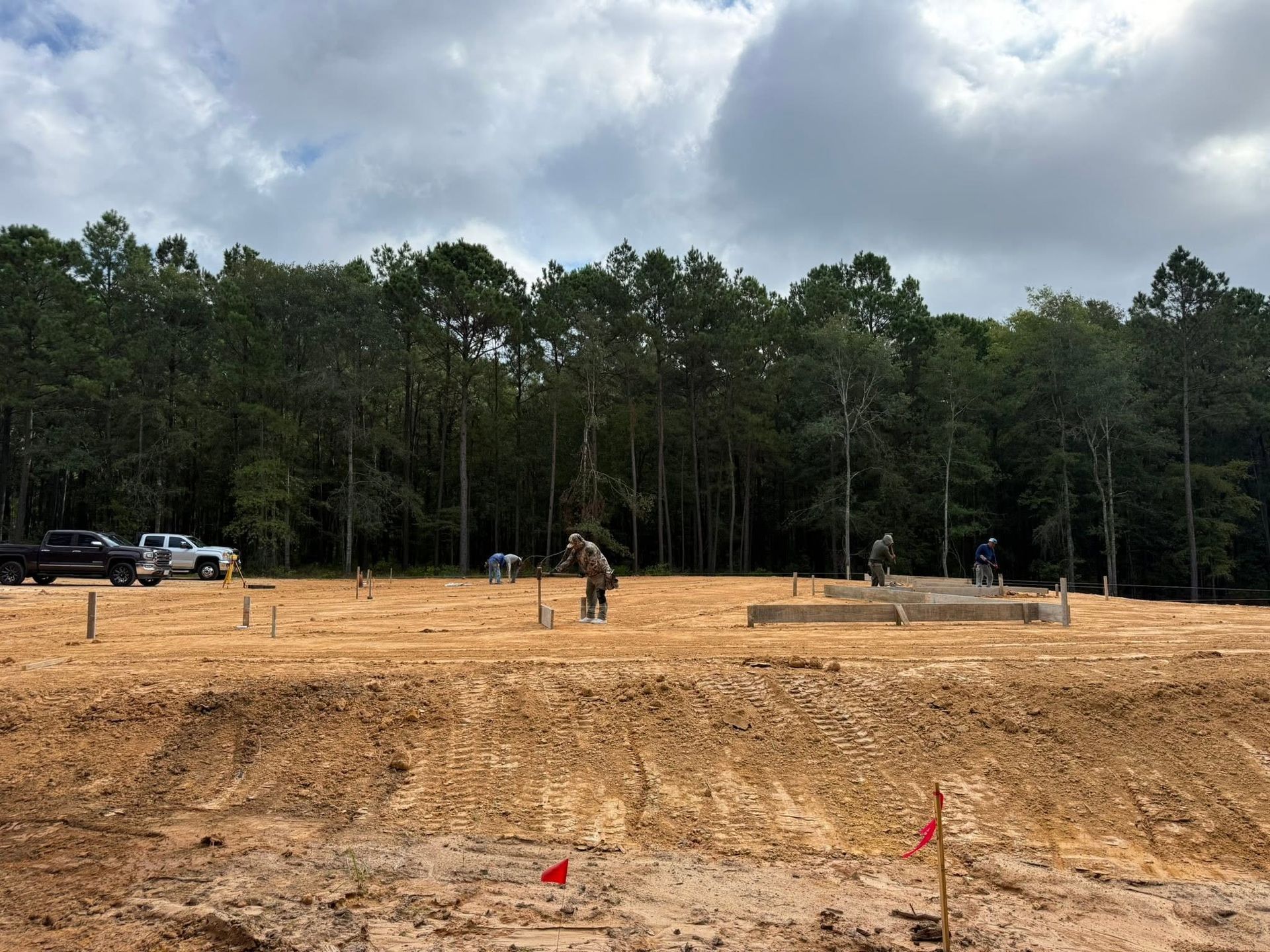
Once pad prep is complete, your site displays a level or properly sloped platform with compacted base material that doesn't shift underfoot, visible grade changes that direct water away from the pad perimeter, and stable soil conditions that support foundation forming or concrete work. Standing water no longer collects on the pad surface after rain, and you can walk across the prepared area without sinking into soft spots that indicate inadequate compaction.
Site pad preparation includes excavation to grade, unsuitable soil removal, base material placement, and compaction verification. It does not include foundation forming, concrete work, or final surface treatments, which belong to separate construction phases and require different equipment and expertise.
Questions Before Starting Pad Preparation
Building on rural properties involves site-specific challenges that affect pad preparation costs, timelines, and long-term performance across the Beaumont to Tyler region.
What makes soil unsuitable for supporting a building pad?
Soil with high organic content, excessive moisture, or low bearing capacity compresses under structural loads, causing foundations to settle unevenly. Excavators remove unsuitable material and replace it with compacted fill that maintains stability under the weight of buildings or equipment.
How is proper drainage slope established during pad prep in Bronson?
Operators grade the pad surface to slope away from planned structure locations, typically at a minimum gradient that prevents water from pooling while avoiding slopes steep enough to cause erosion. In rural Texas, where heavy rainfall occurs seasonally, drainage planning prevents water from undermining foundation perimeters or saturating adjacent soil.
Why does pad preparation happen in one mobilization with other site work?
Coordinating pad prep with excavation, driveway installation, or culvert work reduces total equipment mobilization costs and diesel consumption by completing related tasks during a single site visit. This approach makes economic sense in rural areas where equipment travel distances affect project costs.
When should pad preparation occur during property development?
Pad prep typically follows land clearing and rough grading but happens before foundation contractors arrive to form and pour concrete. This timing ensures the site is ready for construction without leaving prepared pads exposed to weather erosion for extended periods.
What should I verify before approving a completed site pad?
Check that the pad surface drains visibly away from structure locations, compacted base material doesn't shift underfoot, and elevation matches planned foundation height relative to surrounding terrain. Marks Construction verifies bearing capacity and drainage slope as part of the pad prep process.
Marks Construction prepares building pads for rural Texas properties with excavation and grading expertise. Call (409) 781-7574 to discuss your site conditions and schedule pad preparation work.