Earthwork That Establishes Proper Site Grades
Excavation in Bronson for site prep, drainage work, and heavy equipment operations on rural Texas properties
Heavy equipment expertise remains scarce in rural areas, yet Uvalde County development and rural property work demand reliable excavator operators who understand bucket work, grading precision, and material handling. Marks Construction provides excavation services for site prep, drainage work, and foundation trenching across the Beaumont to Tyler region using excavators operated by the owner-operated crew. You'll work with operators who handle excavation and grading directly rather than subcontracting equipment work to separate teams.
Excavation involves operating excavators for precise site pad prep, culvert trenching, and drainage installation while coordinating bucket work with grading to minimize rework and material waste. The process includes removing unsuitable soil, establishing proper elevation, and shaping terrain to direct water away from structures—all decisions that affect long-term site performance and prevent future drainage problems.
Arrange an on-site consultation to assess excavation requirements and equipment access for your property.
What Proper Excavation Work Requires
Excavator-driven work focuses on equipment performance in rural Texas conditions, where operators must adapt to varying soil types, existing grade challenges, and site-specific drainage patterns. Excavation utilization directly impacts diesel cost management in the current market, so operators coordinate multiple tasks—trenching, grading, material placement—within single equipment mobilizations to reduce fuel consumption per hour of work performed.
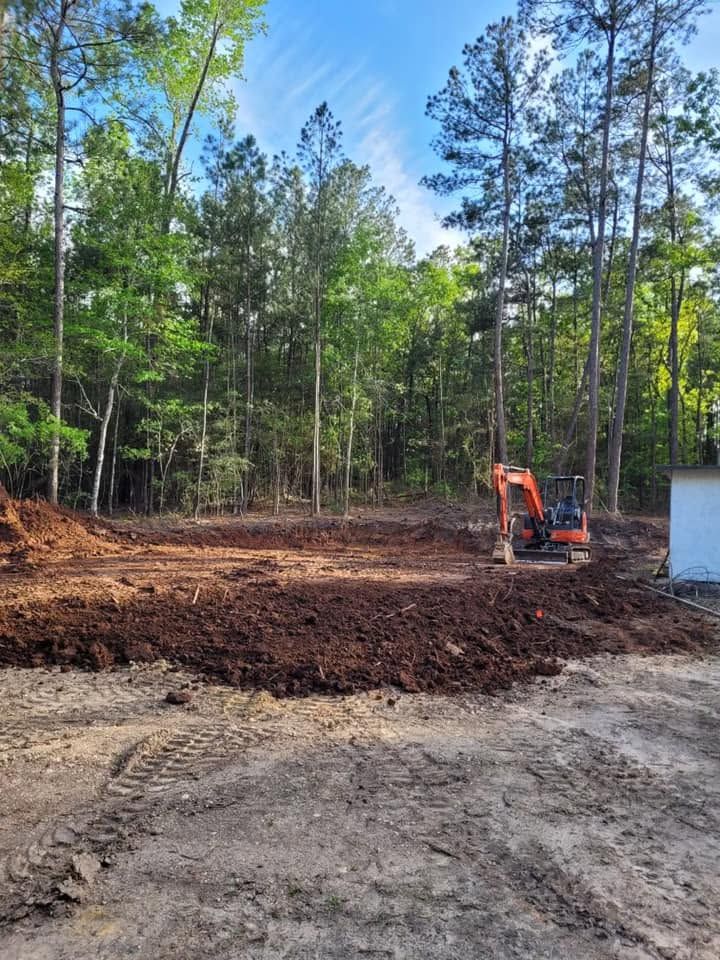
Once excavation is finished, your site displays visible grade changes that direct surface water toward planned drainage paths, trenches prepared to proper depth for culvert or utility installation, and soil conditions verified to support subsequent foundation or paving work. The ground no longer holds standing water after rain events, and equipment can travel across the site without sinking into soft spots that indicate poor compaction or inadequate base preparation.
Excavation work includes equipment operation, material removal or redistribution, and coordination with other site prep phases. It does not include final surface finishing, which requires separate grading equipment, or material hauling beyond what the excavator bucket can move within the immediate work area.
Answers to Excavation Questions
Property owners preparing rural sites frequently ask about excavation costs, equipment capabilities, and how excavator work fits into overall site development timelines.
What factors affect excavation costs on rural properties?
Excavation pricing depends on soil conditions that determine digging difficulty, total cubic yards of material moved, site access that affects equipment mobilization, and whether material stays on site for redistribution or requires off-site hauling. Rocky soil or heavy clay increases equipment hours compared to sandy loam.
How does excavator work differ from grading?
Excavators remove or reposition material using bucket attachments, creating trenches, ponds, or elevation changes, while grading equipment spreads and smooths material to final surface specifications. Excavation establishes rough grade and handles heavy digging; grading refines surface elevations and slope angles.
Why does excavation focus on diesel efficiency?
Current diesel prices make fuel consumption a measurable project cost, so excavator operators coordinate multiple tasks in single mobilizations to reduce total equipment hours and fuel burned per cubic yard moved. Efficient equipment use directly lowers project costs without compromising work quality.
When should excavation happen during site development in Bronson?
Excavation typically occurs after land clearing removes vegetation and obstacles but before final grading establishes finished surface elevations. This sequence allows operators to shape rough terrain and install drainage infrastructure while ground conditions remain workable and before weather limits heavy equipment access.
What should I look for in an excavation contractor?
Operators who demonstrate hands-on equipment expertise, explain how site-specific soil conditions affect the work, and coordinate excavation with other site prep phases to avoid redundant equipment mobilizations. Owner-operated crews often provide more consistent quality than contractors who subcontract equipment work.
Marks Construction operates excavators for site prep and drainage work throughout rural Texas. Contact the company at (409) 781-7574 to discuss excavation needs and schedule equipment for your property.