
Driveways Built to Handle Texas Weather
Driveway installation in Bronson for rural properties and farm access requiring proper base, drainage, and crushed rock application
Proper base and drainage prevent rutting and washout on country properties, yet rural driveways must handle seasonal Texas weather that alternates between heavy rain and prolonged dry periods, conditions that test whether the base was installed correctly. Marks Construction installs driveways with proper base prep, crushed rock, and grading for rural properties and farm access throughout the Beaumont to Tyler area, integrating hauling and excavation into driveway work to source and apply crushed rock materials directly. The company handles site prep through final grading without subcontracting driveway phases, which maintains consistent quality and eliminates coordination delays between separate crews.
Driveway installation prepares subgrade with an excavator, installs compacted crushed rock base at proper thickness and slope, and establishes crown for water runoff so rain moves to driveway edges instead of pooling on the surface. The process coordinates material hauling with application in a single operation, which reduces project time and keeps crushed rock from sitting in piles that wash away before installation.
Request an estimate based on driveway length, base material requirements, and site access conditions specific to your property.
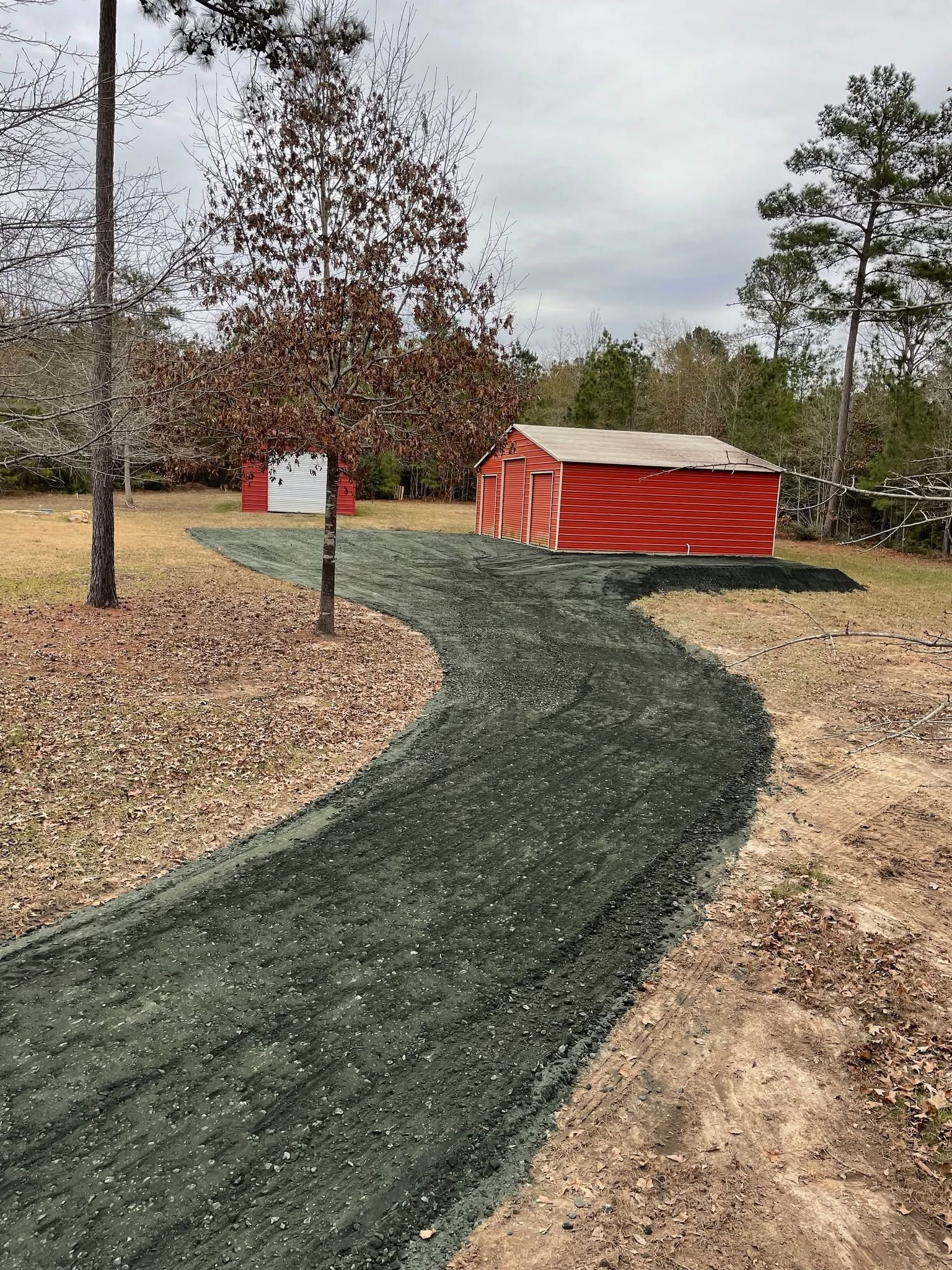
What Separates Long-Lasting Driveways from Failing Ones
Subgrade preparation removes unsuitable soil and shapes the base to proper cross-slope before crushed rock arrives, which prevents soft spots that lead to ruts when vehicles travel the driveway. Crushed rock base is installed at sufficient thickness to distribute vehicle weight and compacted in layers so material locks together rather than shifting under load. Marks Construction establishes crown by grading the center of the driveway higher than the edges, creating a subtle slope that directs water off the surface and prevents standing puddles that weaken the base over time.
After installation, your driveway displays a firm surface that doesn't shift or rut under vehicle traffic, visible crown that sheds water toward edges during rain, and compacted crushed rock that stays in place rather than migrating or washing into ditches. You'll notice vehicles travel smoothly without bouncing through low spots, and the driveway remains passable immediately after storms instead of turning muddy or developing standing water that blocks access.
Installation includes subgrade prep, crushed rock sourcing and hauling, base compaction, and final grading to establish crown. It does not include paving, which requires asphalt or concrete work beyond the scope of crushed rock driveways, or culvert installation if drainage structures are needed where the driveway crosses ditches or low areas.
What Property Owners Usually Ask
Installing driveways on rural Texas properties involves material selection, drainage planning, and base preparation decisions that affect long-term performance and maintenance requirements.
What is the best driveway material for Texas weather?
Crushed rock provides a durable, well-draining base that handles seasonal rain and dry periods without cracking like concrete or requiring the maintenance costs of asphalt. Properly compacted crushed rock driveways last for years on rural properties where paving is often impractical due to distance from paving contractors and high material costs.
How thick should the crushed rock base be for a rural driveway?
Base thickness depends on soil conditions and expected vehicle loads, but most rural driveways require at least four to six inches of compacted crushed rock to prevent rutting under truck traffic. Properties with soft or clay soil may need additional base thickness to distribute weight and prevent the driveway from sinking into subgrade.
Why does crown matter on a crushed rock driveway in Bronson?
Crown creates a subtle high point along the driveway center that directs water toward edges, preventing puddles that saturate the base and cause rutting. Without proper crown, water sits on the driveway surface after rain, eventually working into the base material and weakening its load-bearing capacity.
When is the best time to install a driveway on a rural property?
Driveway installation works best during dry periods when subgrade remains firm and crushed rock can be compacted effectively without excess moisture preventing proper compaction. Wet conditions complicate base prep and make it difficult to establish stable subgrade that supports the crushed rock layer.
How do you prevent washout on sloped driveways?
Steeper driveways require additional compaction, larger rock sizes that resist erosion, and sometimes drainage structures like culverts or water bars that redirect runoff before it gains enough velocity to wash material downhill. Marks Construction adjusts base prep and material selection based on driveway slope and observed water flow patterns during site evaluation.
Marks Construction installs driveways for rural properties throughout the Beaumont to Tyler area, coordinating base prep with material delivery for efficient installation. Call (409) 781-7574 for a free estimate and site evaluation.