Structures That Stabilize Slopes and Terraces
Retaining walls in Bronson for erosion control, site terracing, and property access on rural and development sites
Terrain variation across rural Texas demands retaining walls for stable building sites—slopes that erode after grading or properties where elevation changes create unusable space. Marks Construction builds retaining walls by excavating footing trenches, establishing drainage behind the wall, and installing block, timber, or stone with compacted backfill that won't settle or push the structure forward. The excavator coordinates wall construction with adjacent site grading so the finished structure integrates with driveways, building pads, and drainage systems across properties in Bronson and surrounding areas.
Retaining walls solve two problems: erosion that undermines slopes after site grading, and terrain where elevation differences prevent vehicle access or building placement. Proper base preparation and backfill drainage prevent wall failure—water trapped behind the wall creates pressure that shifts the structure and causes cracking or collapse within the first wet season.
Request a detailed estimate based on slope height and material requirements for your site.
What Changes After Wall Installation
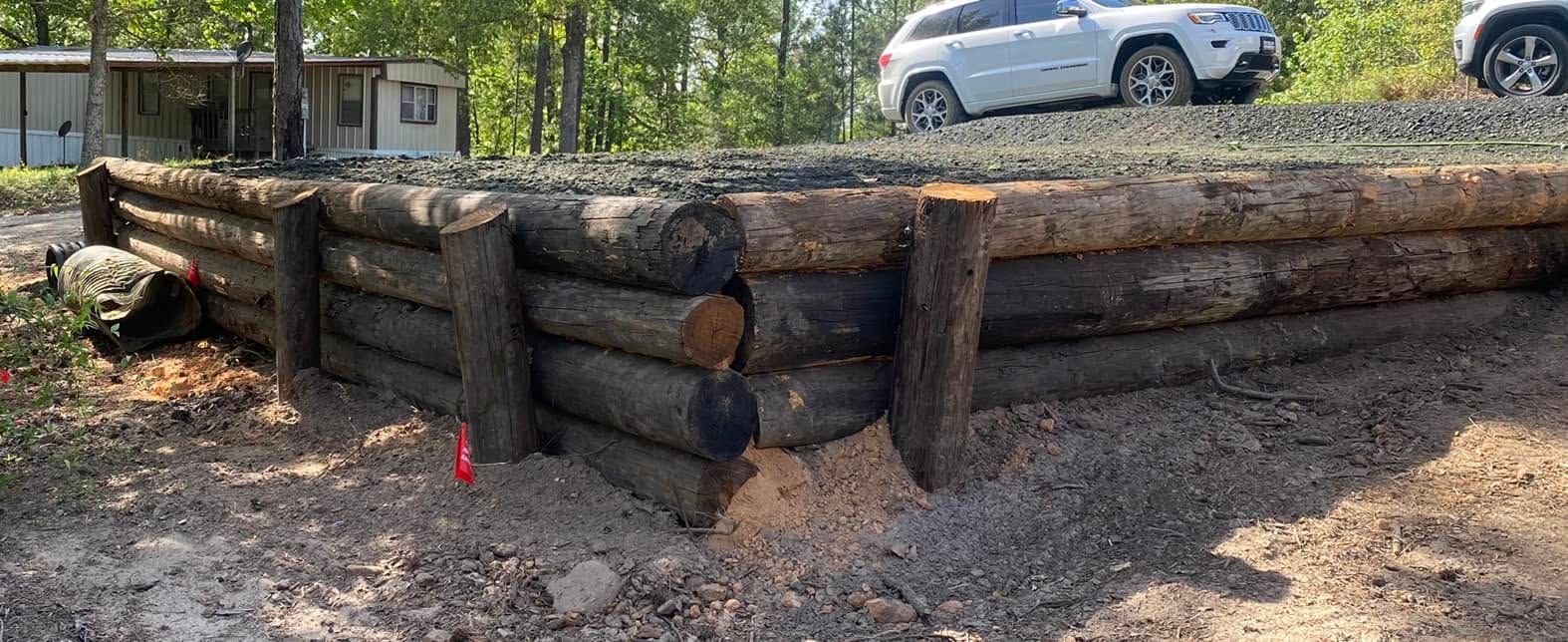
Wall construction begins with footing excavation to stable soil depth, then establishes gravel or compacted base layers that distribute load evenly. Marks Construction installs drainage material behind the wall—gravel backfill or perforated pipe—so water doesn't accumulate and create hydrostatic pressure. Each course of block, timber, or stone gets leveled and locked into place before backfill happens in compacted lifts, and the surrounding slope gets graded to direct surface water away from the wall rather than toward it.
After installation, you'll see stable terraces that support building pads or driveways without erosion, and slopes that no longer wash out during heavy rain. The wall holds backfill in place while allowing water to drain through or around the structure, which prevents the pressure buildup that causes wall movement. Retaining walls integrate with site prep work—graded pads tie into the top of the wall, and drainage systems route runoff around the structure to prevent undermining.
Wall height determines footing depth and material requirements, and taller structures sometimes need engineered designs to handle soil pressure. The work includes compacting backfill behind the wall in layers rather than dumping loose soil, which settles and creates voids that destabilize the structure. Rural properties often need multiple retaining walls to terrace slopes for building sites or create level access roads on hillsides.
Answers to Frequent Service Questions
Retaining wall projects across the Beaumont to Tyler corridor raise questions about materials, drainage, and long-term stability.
What is the best material for a retaining wall in Texas?
Material choice depends on wall height and site conditions—block walls handle taller structures with engineered precision, while timber or stone works for shorter walls where appearance matters and drainage is straightforward.
How much does a retaining wall cost in Bronson?
Cost depends on wall height, material type, and footing depth—taller walls require deeper footings and more backfill compaction, and engineered designs add design and permitting time.
Why do retaining walls fail?
Walls fail when drainage isn't established behind the structure, allowing water to build pressure that shifts the wall forward, or when backfill isn't compacted and settles to create voids.
How does a retaining wall prevent erosion on my property?
The wall holds soil in place on sloped terrain and establishes a stable grade that resists washout during rain events, while proper drainage behind the wall prevents water from undermining the structure.
What preparation is required before retaining wall installation?
The contractor excavates the footing trench to stable soil depth, establishes base layers, and grades surrounding slopes to direct water away from the wall area before material installation begins.
Marks Construction integrates retaining walls with broader excavation and site prep work, managing multi-phase installation with its own equipment. Schedule a property evaluation at (409) 781-7574 to identify wall height, material options, and drainage requirements for your site in Bronson.