Material Delivery That Keeps Projects Moving
Dirt, rock, and sand hauling in Bronson for site prep, driveway base, and land development across rural Texas properties
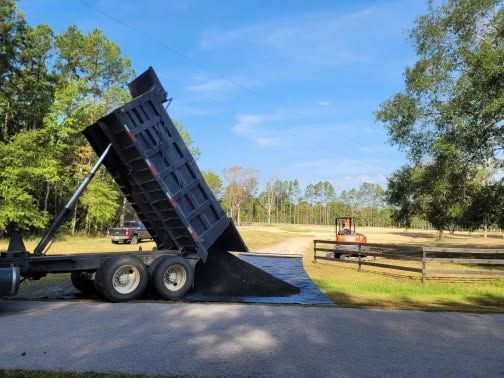
Marks Construction hauls dirt, rock, and sand throughout the Beaumont to Tyler corridor for site prep, driveway foundations, and land development projects. Rural properties often require specific materials delivered to remote locations where timing directly affects project schedules and equipment mobilization costs. The company operates dump trucks and excavator fleets to minimize haul trips and reduce diesel consumption per cubic yard moved, which directly impacts final costs in a volatile fuel market.
Material hauling involves coordinating multi-load jobs to maximize efficiency on high-volume earthwork, sourcing appropriate rock or sand for the intended application, and scheduling deliveries to match site conditions. In rural Texas construction, efficient material transport becomes critical when properties lack nearby supply access or when weather windows limit the days suitable for heavy truck traffic on unimproved roads.
Schedule a property evaluation to determine material quantities and delivery access for your specific site conditions.
How Efficient Hauling Reduces Project Costs
Hauling operations focus on diesel-efficient heavy equipment operation, where the number of trips and fuel consumed per cubic yard moved directly determine project margins. A 4-person crew actively manages hauling operations by coordinating load sizes with site requirements, which prevents over-delivery waste and eliminates return trips for additional material. Equipment utilization becomes especially critical when fuel prices fluctuate, making every gallon of diesel a measurable line item in the project budget.
After hauling is complete, your site has the exact base material needed for the next phase of construction—whether that's a compacted pad ready for grading, crushed rock staged for driveway installation, or fill dirt positioned for drainage work. You'll notice material placed where excavators can immediately begin spreading and compacting without repositioning loads, which saves both time and additional equipment hours.
Hauling services include material sourcing, transport logistics, and coordination with excavation or grading crews already working the site. The service does not include material spreading or final grading, which are handled separately as part of excavator work or site pad preparation depending on project scope.
What Property Owners Ask About Material Hauling
Coordinating material delivery across rural Texas properties involves understanding access limitations, fuel cost impacts, and timing constraints specific to the Beaumont to Tyler region. These questions address common concerns before scheduling hauling operations.
What determines the cost of hauling dirt or rock to my property?
Hauling costs depend on distance from the material source, total volume required, site access conditions that affect truck maneuverability, and current diesel prices. Projects requiring multiple loads benefit from coordinated scheduling that reduces per-yard transport costs by maximizing truck capacity on each trip.
How do you minimize diesel consumption during hauling operations?
Dump trucks and excavators are coordinated to complete multi-load jobs in single mobilizations, which eliminates redundant travel and reduces fuel burned per cubic yard delivered. Equipment is matched to load size so trucks operate at optimal capacity rather than making partial trips.
When is the best time to schedule material delivery for rural properties in Bronson?
Material should arrive when site conditions allow immediate unloading and placement, typically after initial land clearing and before final grading begins. Wet weather limits truck access on unimproved roads, so hauling is often scheduled during dry periods when ground conditions support heavy equipment traffic.
What types of rock and sand are hauled for different applications?
Crushed rock serves as driveway base material, while specific sand types are used for drainage work or concrete mixing depending on particle size and compaction characteristics. Marks Construction sources materials based on the intended use, ensuring proper base stability for the application.
How is material staged on site to support efficient excavator work?
Material is placed where excavators can reach it without repositioning loads, typically near the work area but clear of active grading zones. Proper staging reduces equipment idle time and allows spreading or compacting to begin immediately after delivery.
Marks Construction coordinates hauling with excavation and site prep work to keep rural Texas projects moving efficiently. Request a delivery estimate based on your material needs and property access conditions.