Access and Survey Preparation for Rural Sites
Land clearing in Bronson for development, site preparation, and property access on overgrown Texas terrain
Uvalde County properties often feature dense brush, timber, and overgrown terrain that prevents safe access and accurate site survey, conditions that must be addressed before construction equipment can operate or property boundaries can be verified. Marks Construction clears land for development, site preparation, and rural property access throughout the Beaumont to Tyler area using excavator-based clearing that combines debris removal and site grading in a single operation. The company removes stumps, brush, and obstacles while establishing grade for subsequent site work, which eliminates the need to mobilize separate equipment for clearing and initial grading phases.
Land clearing uses excavator-based methods to pull stumps, push brush into piles for removal, and scrape topsoil to expose stable subgrade—all performed with the same equipment that will later handle excavation or drainage work. This approach reduces separate equipment mobilization costs and coordinates clearing with the next phase of site preparation rather than treating clearing as an isolated task.
Request a site visit to evaluate clearing requirements and access challenges specific to your property's vegetation and terrain.
What Happens After Land Is Cleared
Clearing work involves operating excavators to remove vegetation down to mineral soil, extract root systems that interfere with grading, and pile debris for disposal or burning where regulations permit. Operators assess which trees or vegetation remain for erosion control or property aesthetics versus what must be removed to establish safe equipment access and accurate survey lines.
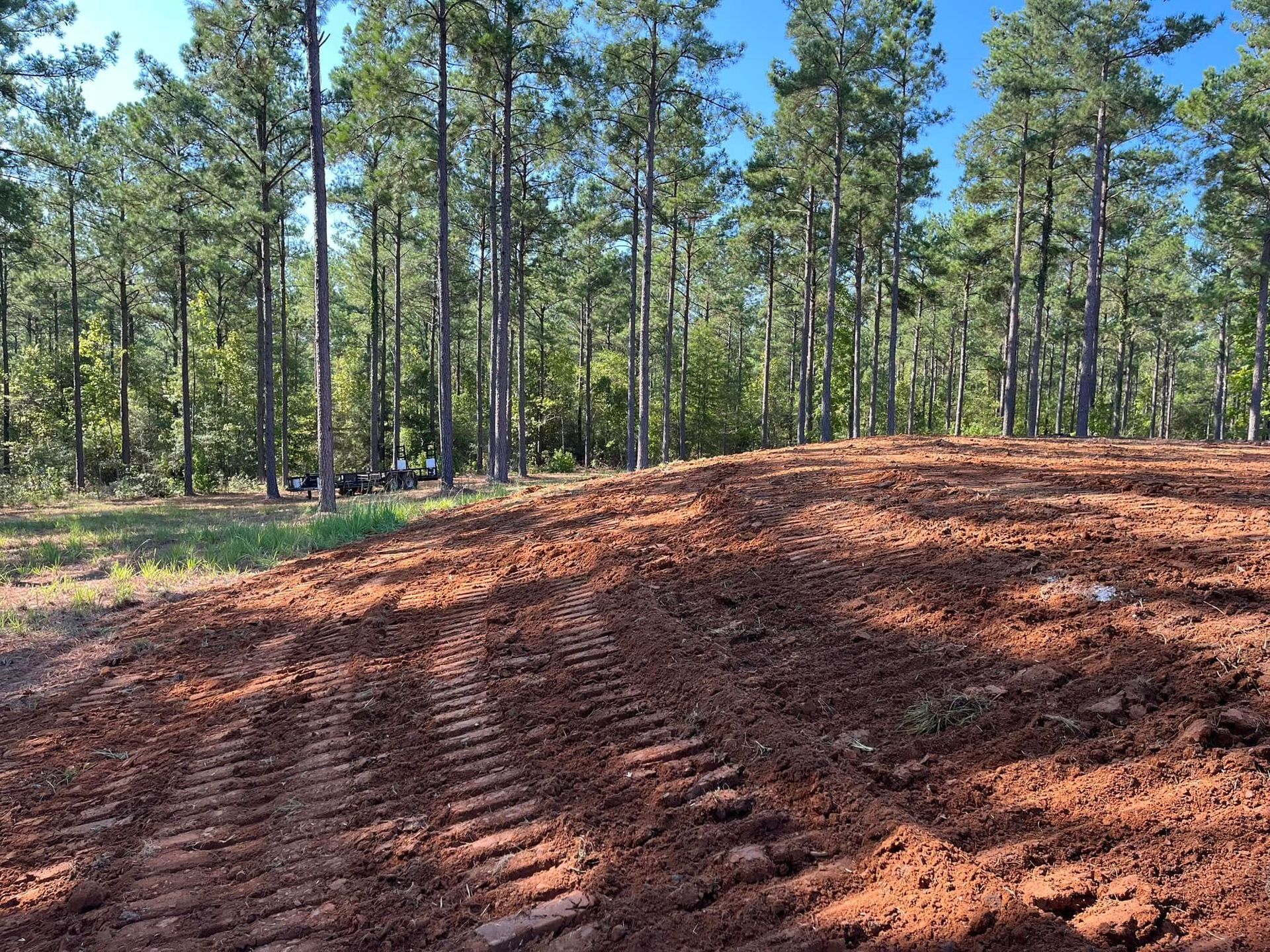
After clearing, your property displays open ground where surveyors can establish accurate boundaries and elevation benchmarks, equipment can travel without obstruction, and soil conditions become visible for excavation planning. Stumps and root masses no longer interfere with digging or grading operations, and the site transitions from overgrown land to workable construction terrain ready for the next development phase.
The service includes vegetation removal, stump extraction, and debris piling but does not cover off-site disposal fees, which vary by volume and local landfill rates. Burning debris on site requires landowner permits and compliance with county burn regulations, which change seasonally based on fire risk conditions.
Common Questions About Clearing Rural Land
Property owners preparing overgrown rural sites ask about clearing methods, debris handling, and how clearing integrates with subsequent construction phases across the Beaumont to Tyler region.
What clearing method works best for rural Texas properties?
Excavator-based clearing removes stumps and brush in one operation while exposing subgrade for grading, which eliminates the need for separate mulching or bulldozer work. This method suits properties where clearing prepares the site for immediate excavation or pad preparation rather than leaving land in a semi-natural state.
How is debris handled after land clearing?
Vegetation and stumps are piled on site for removal, burning, or grinding depending on volume and landowner preference. Off-site hauling incurs disposal fees; on-site burning requires compliance with county regulations and favorable weather conditions that minimize fire risk.
When should land clearing occur before construction?
Clearing should happen early enough to allow soil conditions to stabilize after root removal but close enough to construction start that vegetation doesn't regrow. In Bronson, clearing during dry months prevents equipment from rutting wet ground and allows surveyors to establish benchmarks on firm terrain.
Why does clearing use excavators instead of brush mowers or dozers?
Excavators extract stumps and roots that interfere with later excavation work, whereas mowers leave root systems intact and dozers often push debris without fully removing obstacles. Excavator clearing prepares the site for immediate grading or trenching without requiring follow-up stump removal.
What site information helps estimate clearing costs?
Total acreage, vegetation density, stump size and quantity, site access for equipment, and whether debris stays on site or requires off-site disposal all affect clearing time and equipment hours. Properties with large hardwood stumps take longer to clear than properties with primarily brush and small saplings.
Marks Construction coordinates land clearing with excavation and site prep phases to keep rural development projects moving forward. Call (409) 781-7574 for a free estimate based on your property's clearing needs.