Drainage Systems Built for Rural Crossings
Culvert installation in Bronson for creek crossings and low-point drainage on rural properties
Marks Construction installs culverts across rural Texas properties where creek crossings and drainage management determine whether you can access your land year-round. The work involves excavating trenches to grade, setting pipe with verified inlet and outlet alignment, and backfilling with compacted material that won't settle after the first heavy rain. Properties in Bronson and the Beaumont to Tyler corridor need culverts sized correctly for local flow patterns—undersized pipe means washed-out approaches and eroded property access after storm events.
Culvert installation addresses two problems: properties where standing water blocks vehicle access during wet months, and creek crossings that erode without proper pipe and backfill. The excavator digs the trench to match the natural grade, positions the culvert pipe so water enters and exits without creating turbulence that undermines the structure, then compacts backfill in layers to support the load of trucks and equipment crossing above.
Schedule a property evaluation to identify drainage flow and determine culvert size requirements for your site.
What Proper Culvert Work Requires
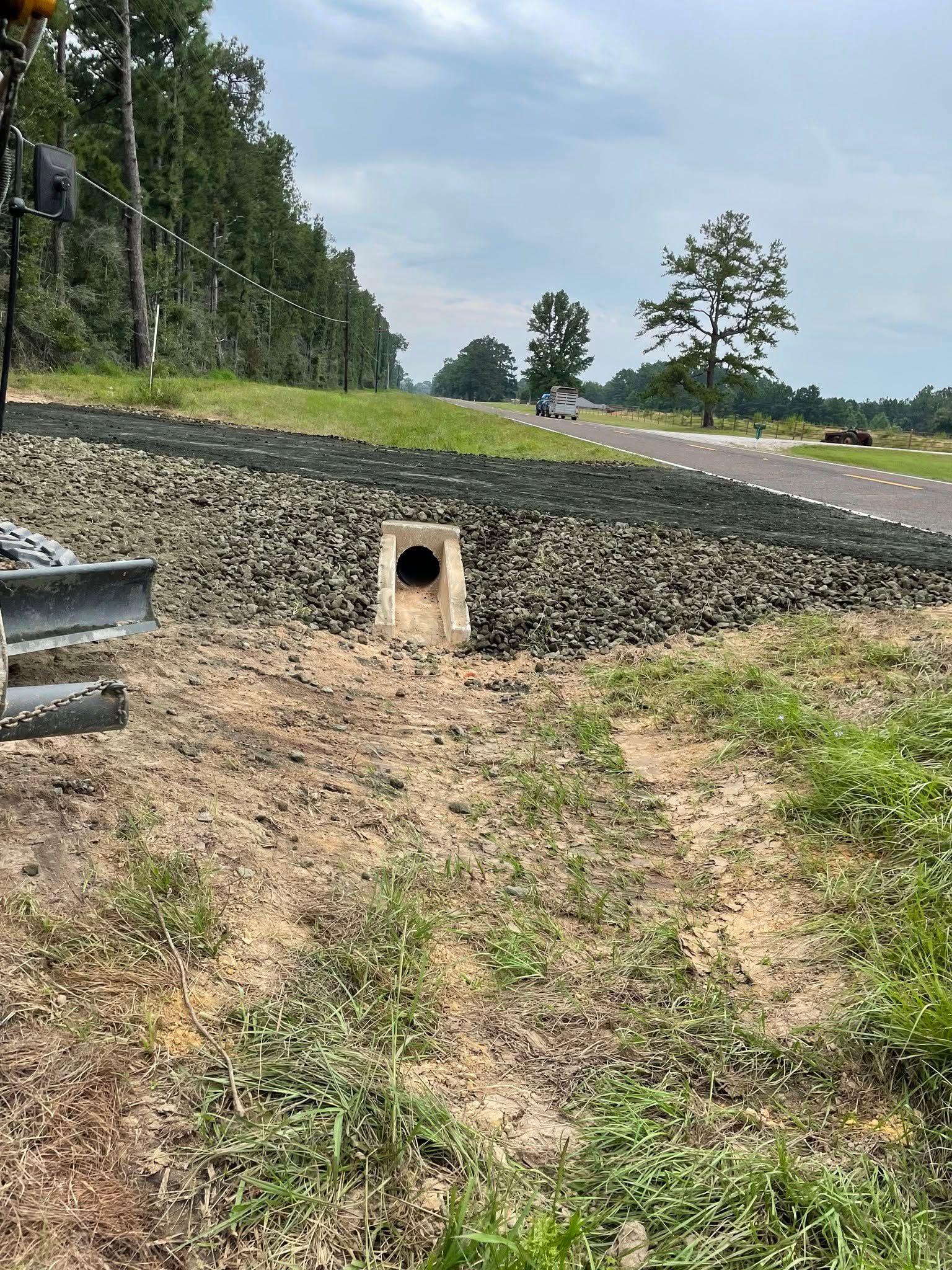
Marks Construction handles trenching and material handling with its own excavator fleet, which means the same operator who digs the trench verifies inlet and outlet alignment before backfill begins. The excavator establishes approach ramps on both ends of the culvert and grades surrounding soil to direct surface water into the pipe rather than around it. Compaction happens in controlled lifts—loose backfill settles under load and creates dips that trap water and damage the road surface above.
After installation, you'll see a crossing that handles vehicle weight without dipping or cracking, and drainage that moves water downstream instead of pooling at the culvert entrance. The approach ramps slope gradually enough for loaded trucks to cross without scraping, and the pipe diameter matches the volume of water moving through during peak flow events. Marks Construction coordinates culvert work with broader site drainage planning, so runoff from graded pads or driveways ties into the same system.
Culvert projects sometimes require additional riprap or headwall structures if the site has steep banks or high-velocity flow. The work includes establishing the culvert at the correct elevation so it doesn't become a dam during heavy rain, and grading the outlet end to prevent erosion where water exits the pipe. Rural Texas properties often need multiple culverts to manage drainage across low spots and seasonal creek beds.
Common Questions About This Service
Property owners across rural Bronson typically ask how culvert sizing and installation affect long-term drainage performance.
What size culvert do I need for my property in Texas?
Culvert diameter depends on the volume of water moving through the crossing during peak flow—undersized pipe causes backups and erosion, while the excavator verifies slope and alignment to prevent settlement after installation.
How does culvert installation prevent erosion?
Proper installation directs water into the pipe at a controlled angle and exits it downstream without creating turbulence that undermines surrounding soil; compacted backfill and approach ramps keep the structure stable under vehicle load.
When should I install a culvert on my rural property?
Install culverts before wet seasons if standing water currently blocks access, or if you're developing new roads and driveways that cross natural drainage paths.
What happens if the culvert isn't set to the correct grade?
Incorrect grade causes water to pool at the inlet or creates excessive velocity at the outlet, both of which lead to erosion and structural failure within the first few storm cycles.
How much does culvert installation cost in Bronson?
Cost depends on pipe diameter, trench length, and soil conditions—rocky or saturated ground requires more excavation time, and larger crossings need heavier pipe and more compacted backfill.
Marks Construction operates excavators for precise culvert placement and manages the full installation without outsourcing trench work. Request a site evaluation to review drainage flow and culvert requirements for your property in Bronson.